|
|
|
|
********************
|
|
Florida Tangueros!
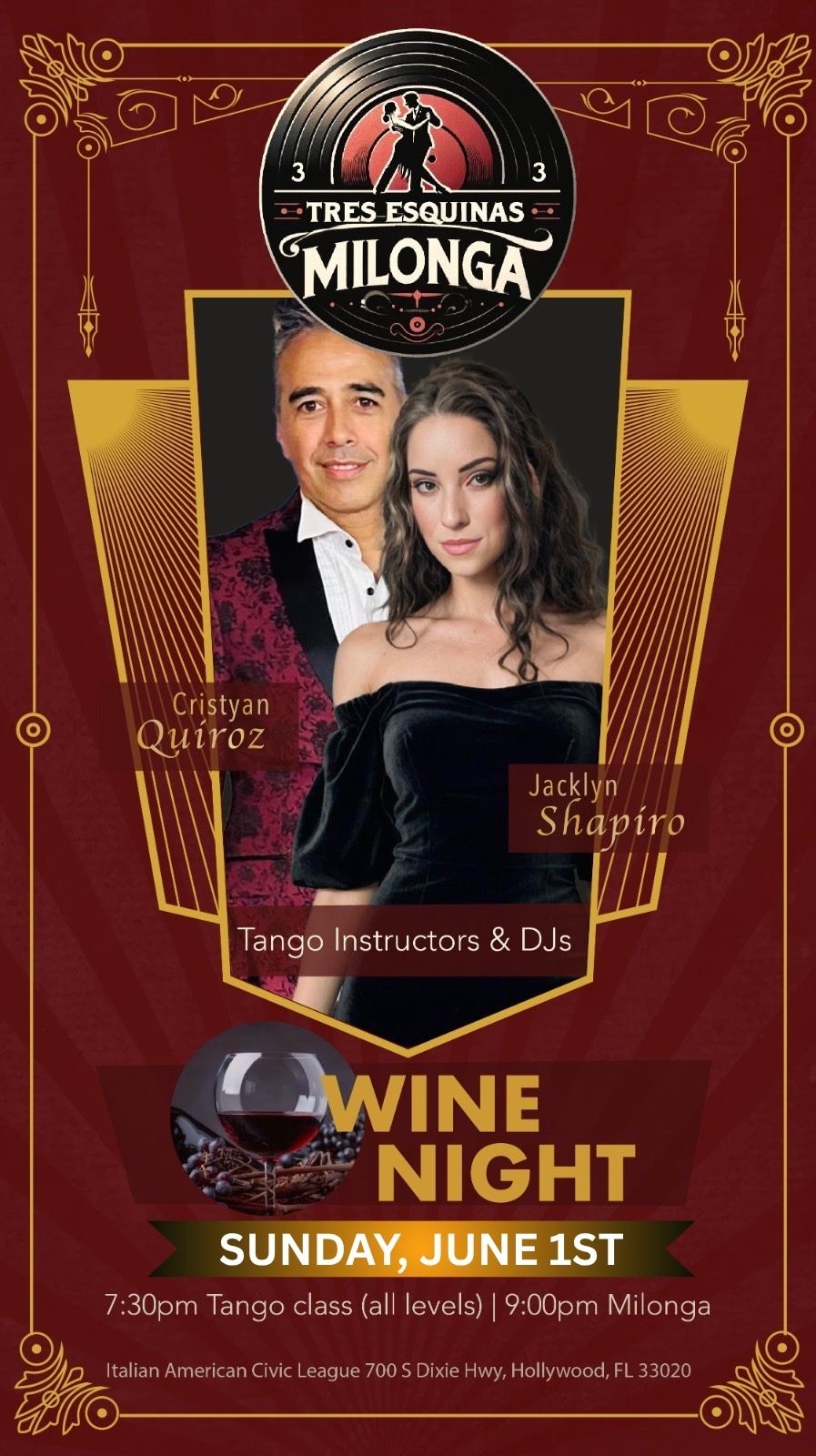
TRES ESQUINAS MILONGA is coming up on
Easter Sunday
Sunday, June 1st, 2025
Please check all of the details below:
7:15pm - Doors Open for Tres Esquinas
7:30pm to 8:30pm- Tango Class by Jacklyn Shapiro
9pm - Floor open for Milonga
10:30pm Announcements
1am Goodnight
Best tandas by Fantastic DJs
TDJ Cristyan & TDJ Jacklyn
Cost: $25 cash at door
or zelle paid to milongatresesquinas@gmail.com
Make sure you reserve in advance!
For table reservations please txt (267) 808-1853
*6 person min to reserve a table/otherwise plenty of open seating
ample Free Parking
light snacks & drinks available
large & beautiful hardwood floors
empanadas by Rosita
new A/C & fans installed
LOCATION:
Italian American Club
700 S Dixie Highway
Hollywood, FL 33020
Www.tresesquinasmilonga.com
Big thanks from your hosts,
💃Jacklyn Shapiro
🕺Cristyan Quiroz
|
|
********************
|